

BLOG
Feeding a Nation: The Unsung Entrepreneurs of the Open Range
PUBLISHED: November 13, 2025
When most people think of small business, they picture storefronts on Main Street, a family-run machine shop, or maybe a local restaurant. But there’s another group of small-business owners who get up before sunrise, work in every kind of weather, and rarely ask for attention: America’s ranchers.
Ranching isn’t just a way of life — it’s business. Every herd, every acre of grazing land, every feed truck and fence line represents a family enterprise. These are small-business owners in boots, not suits, who take risks every single day to feed a nation.
Ranchers are small business owners who work seven days a week to feed America.
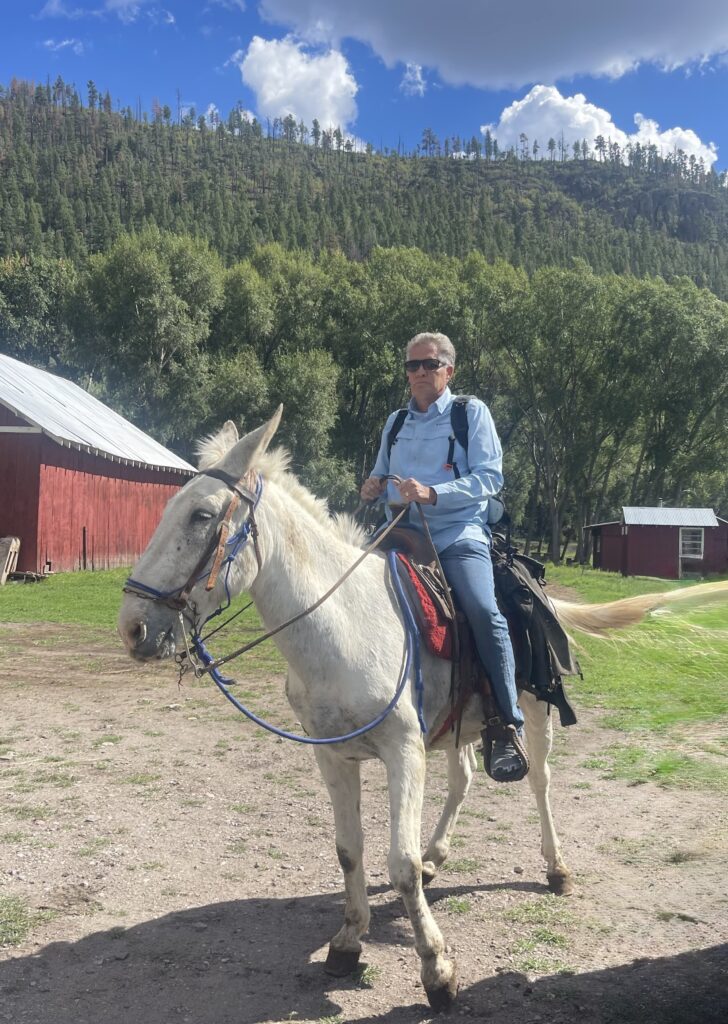
Recently, I had the opportunity to ride along the Continental Divide on a third-generation family cow-calf operation. The family owns about 50 acres but currently leases another 24,000 acres from the U.S. Forest Service, land their family has managed for generations. Under these leases, the ranchers are responsible for all improvements and upkeep, including fencing, water systems, and protecting their livestock from predators.
The terrain is treacherous, which is a challenge that defines their way of life. That’s why they rely on mules instead of horses. The mule is a classic, sure-footed animal capable of traversing the steep and narrow trails. While there, I rode a mule named Stinky. Even though the path was steep, and at times dangerous, Stinky was sure-footed every step of the way.
It reminds me of America’s ranchers who are steady, resilient, and dependable. Like mules, ranchers are sure-footed. They offer stability that keeps America moving forward.
The Backbone of Rural America
From Texas and Oklahoma to New Mexico, Louisiana, and Arkansas, ranchers form the backbone of rural economies. They hire local welders and mechanics, purchase equipment from small dealers, and ship livestock that supports processors and grocers across America. Every ranch dollar turns over many times in the local community.
Behind every operation is a family business plan that balances feed costs, manages weather losses, negotiates leases, maintains equipment, and keeps the next generation on the land. These aren’t giant corporations: they’re multi-generation small businesses that keep our supply chain alive.
The Challenges They Face
Ranching today is not easy. Drought, wildfire, inflation, rising costs, and regulatory pressure all test the strength of these operations. One such pressure is the Bureau of Land Management’s grazing rights rule. This rule limits grazing rights to 10-year leases, down from the original 99-year terms. The change creates instability for ranchers who can’t plan for the future or invest confidently in their operations. Restoring 99-year leases would bring long-term stability to the ranching industry. Despite these challenges, ranchers keep showing up, because they love the land, their livestock, and the legacy they’re preserving.
As a regional advocate for the Office of Advocacy, I am committed to ensuring that the voice of America’s ranchers is heard in Washington. When new federal rules or policies are proposed that could affect how ranchers do their work, we make sure policymakers understand the real-world impact on small operations out in the field. By working in the field, I am able to hear those concerns directly.
Another way for the Office of Advocacy to hear concerns is through the Red Tape Hotline. Please call the Red Tape Hotline at 800-827-5722 and select option 3 or send an email to RedTape@sba.gov if you are experiencing pain points and need assistance.
So, the next time you drive past a pasture at sunrise, remember that behind that fence line is a small business at work — one that fuels our economy and feeds our country.