

BLOG
Spotlighting Cybersecurity Month
PUBLISHED: October 23, 2025

That cellphone in your pocket, that tablet on your nightstand, and that laptop in your study all share something with those multimillion-dollar companies–they rely heavily on the internet to operate. The internet is everywhere, and cybersecurity affects us all.
While it used to be a given that a business would have a brick-and-mortar location, small businesses have utilized the internet to run businesses completely virtually. More vital business information is stored online rather than in filing cabinets in the back office.
To prevent hackers from breaching virtual spaces and having access to sensitive data, small businesses need to ensure cybersecurity safety measures are in place. In some industries, Advocacy has learned first-hand how important it can be.
Cybersecurity in Manufacturing
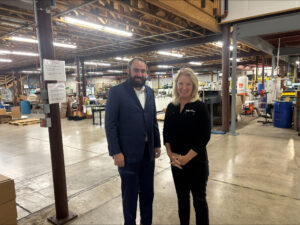
Cybersecurity plays a pivotal role in manufacturing. There are over 600,000 small manufacturing firms in the U.S. Some manufacturers incorporate AI automation for quick, seamless business operations, or AI-powered systems can work on materials that pose a threat to humans in proximity, like chemicals and extreme temperatures.
For example, the Office of Advocacy’s Assistant Chief Counsel David Mullis spoke at a cold chain assurance forum where the organizers simulated a cyber threat of someone hacking into a business’s temperature controls. Vaccines and food would potentially spoil due to the change in temperature, and hackers could demand payment to avoid these effects. The economy thrives on manufacturing, and keeping manufacturers safe from cybersecurity threats protects the American economy.
Cybersecurity & AI

Artificial intelligence (AI) is used in our day-to-day living to enhance and provide seamless operations in seconds instead of the hours or days that it might take if done manually. Now, a well-written email or debugging code can be done with a breeze using AI models. However, one potential flaw stands in its path – cybersecurity threats. To get ahead of this problem, on June 6, 2025, President Trump signed Executive Order 14306, which bolsters government-wide software systems and infrastructures and instructs agencies to develop cybersecurity plans for the public.

Videos of real people with actors manipulating their movements and voice using AI have become a popular cybercrime, which offers more believable phishing scams. Further, AI can be used as a tool to hack into small businesses’ systems. A business lacking effective security against AI-powered cybercrimes could not only jeopardize its business by being attacked, but also other businesses and customers as well.
“Over 600,000 small manufacturing firms now depend on internet-connected systems to operate, which means cybersecurity isn’t optional—it’s an economic necessity,” said Chief Counsel Casey B. Mulligan. “AI is a strong tool for small businesses to wield for quickly identifying and avoiding threats.”
AUTHOR:
Akira Loring, Editor
EMAIL:
TOPICS:
TAGS:
The Office of Advocacy works with small businesses and wants to hear from you. Please call the Red Tape Hotline at 800-827-5722 and select option 3 or send an email to RedTape@sba.gov if you are experiencing pain points and need assistance.